Inversion / Presence
A reorientation of space through sound and light.
Groupwork presented Jake Muir and JS. Inversion / Presence examined how sound reshapes spatial perception, inviting a subtle destabilization of scale: what feels close, what recedes, what hovers between.
Rather than a stage-centered performance, the room itself became a shifting field. Jake Muir (Berlin) works with sculpted field recordings and dissected samples — compositions that feel glacial, intimate, unsettled. Jesse Sappell (JS), founder of Motion Ward (Los Angeles), curates abstract electronic music with an emphasis on atmosphere and spatial sensitivity. Their performances emphasized restraint, tonal drift, and long-form immersion.
Video
Documentation



Concept
Inversion / Presence proposed a simple inversion: If sound defines space, what happens when the space begins to feel unstable?
Near and far blurred. Ceiling and floor exchanged roles. Silence carried as much weight as density. The performance invited listeners to notice the elasticity of their own perception.
The goal was not spectacle. It was recalibration.
System / Method
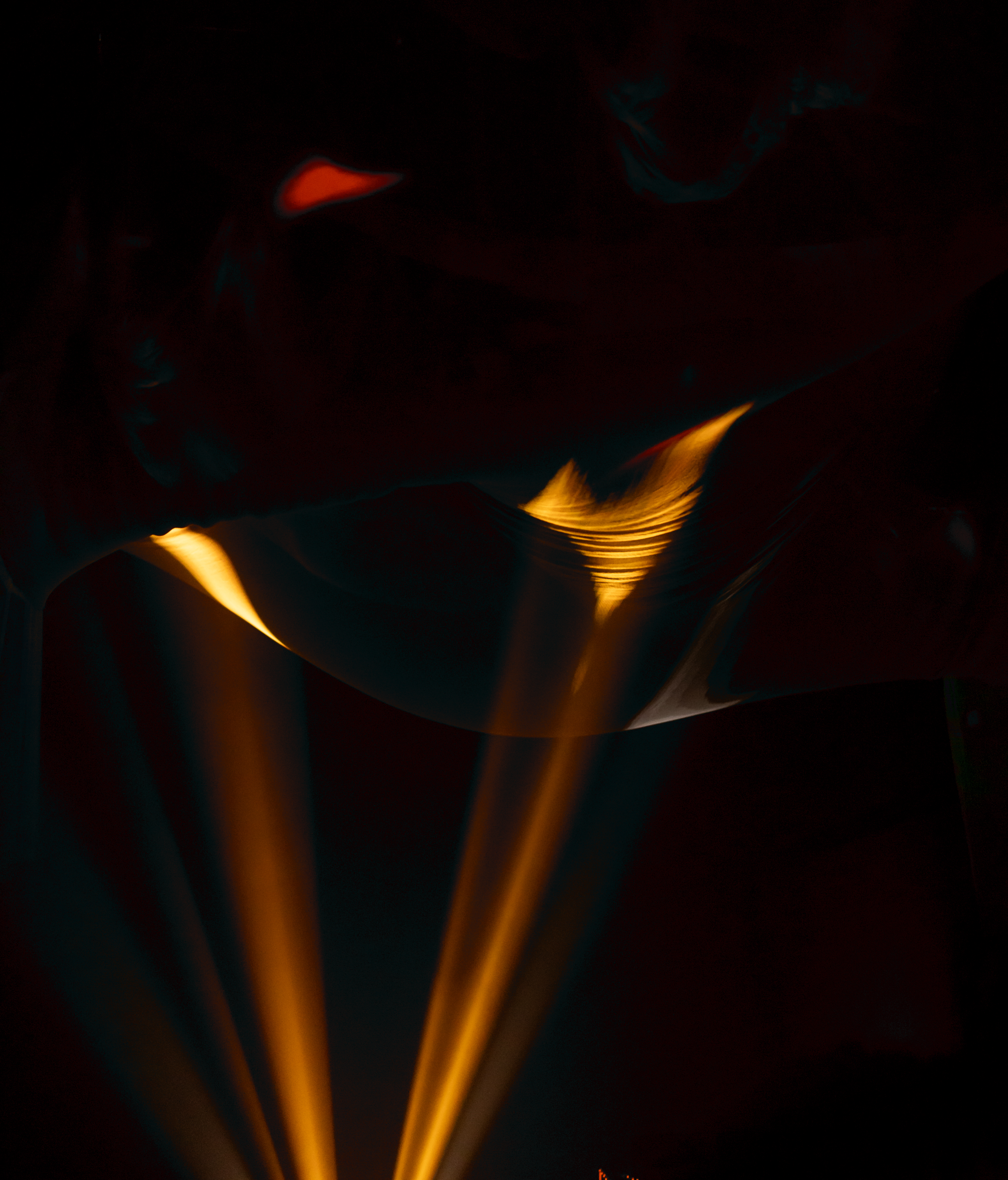
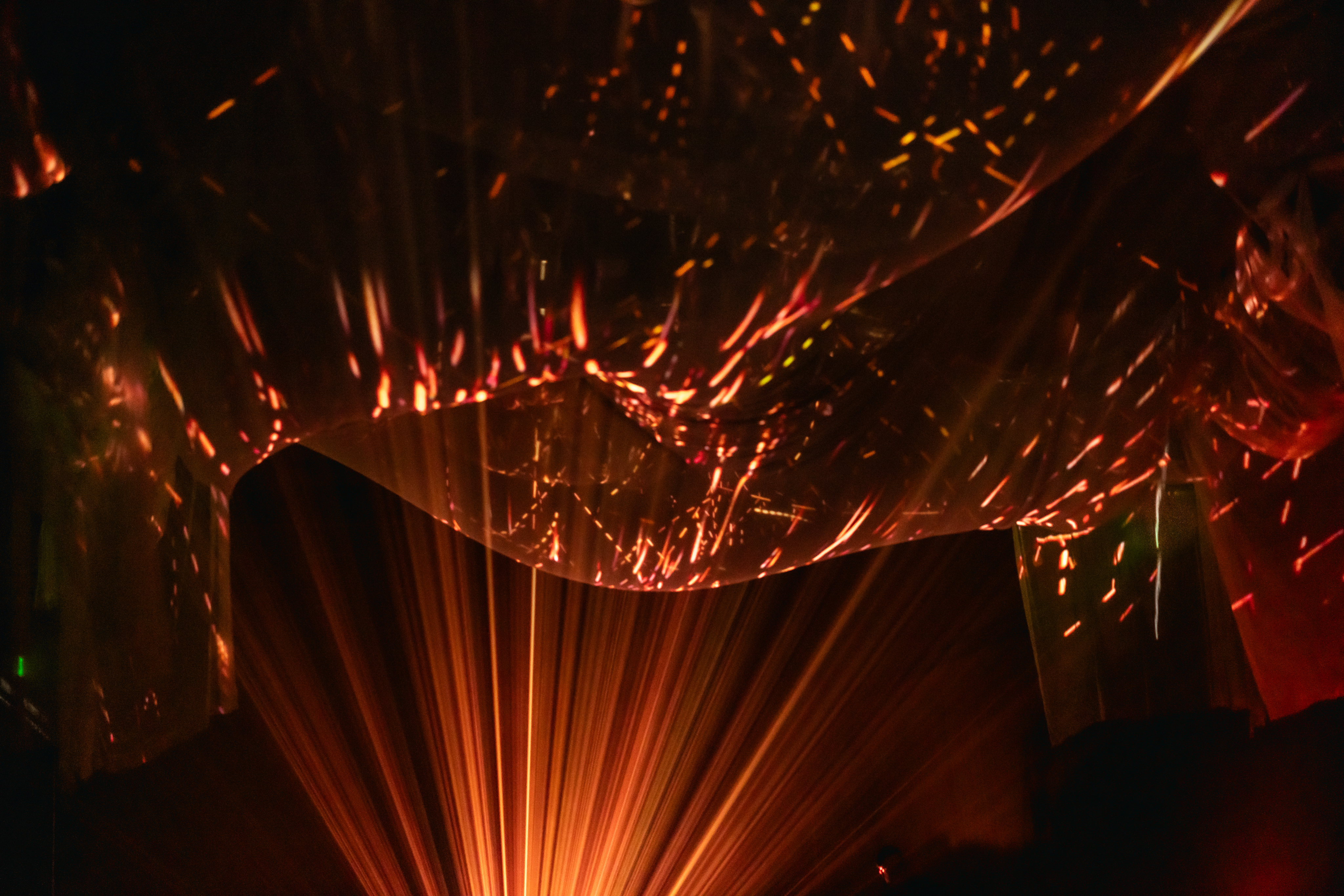
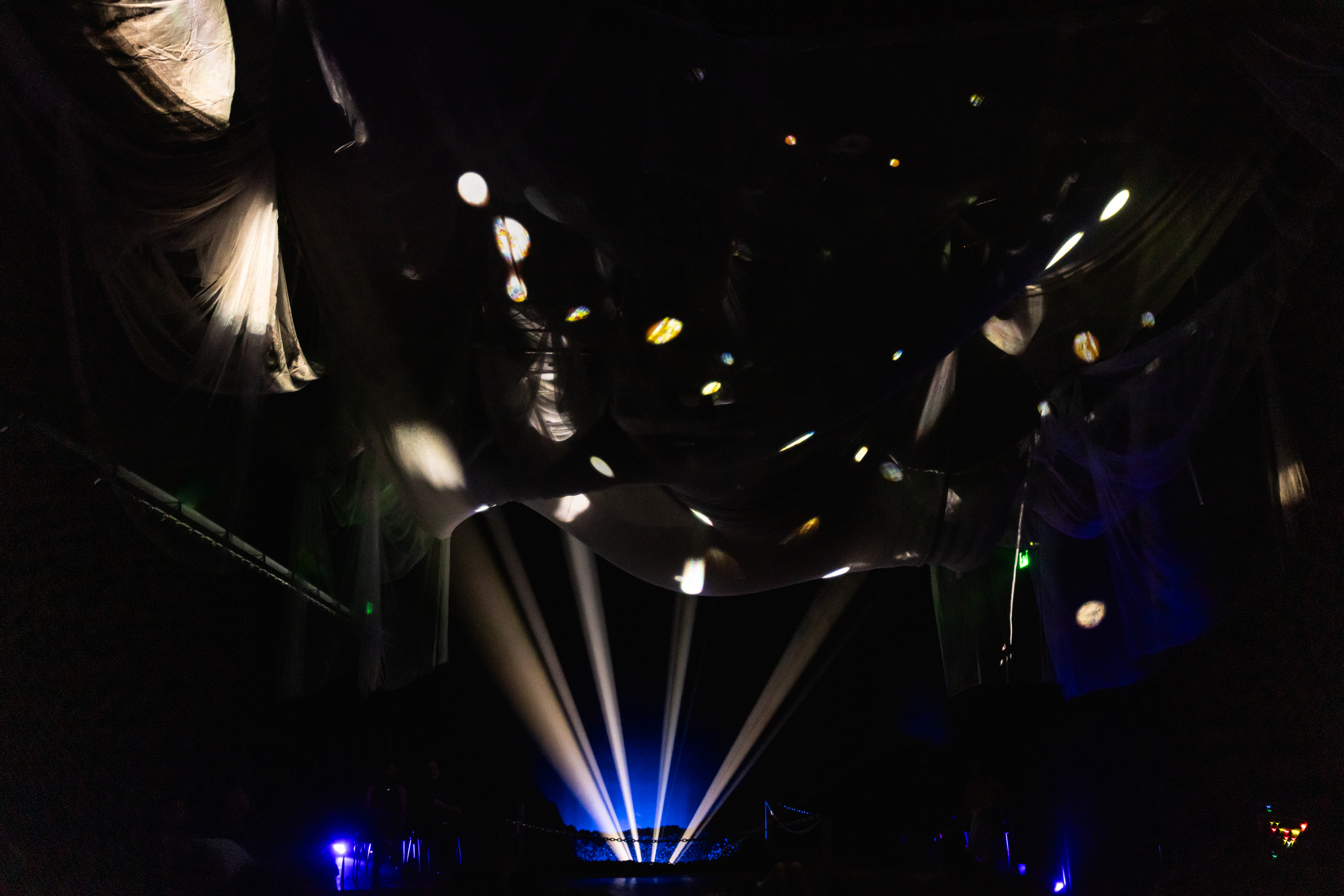
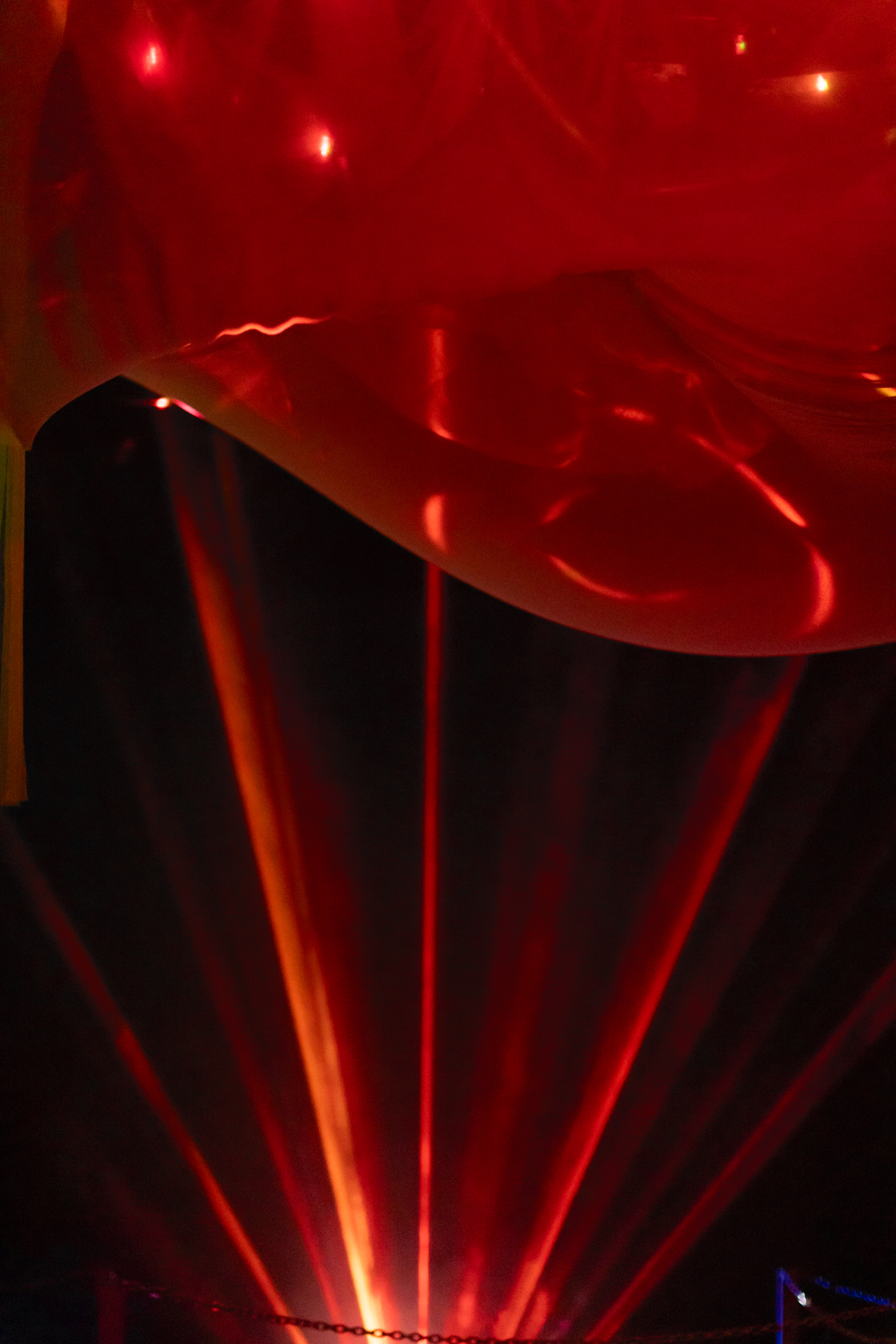
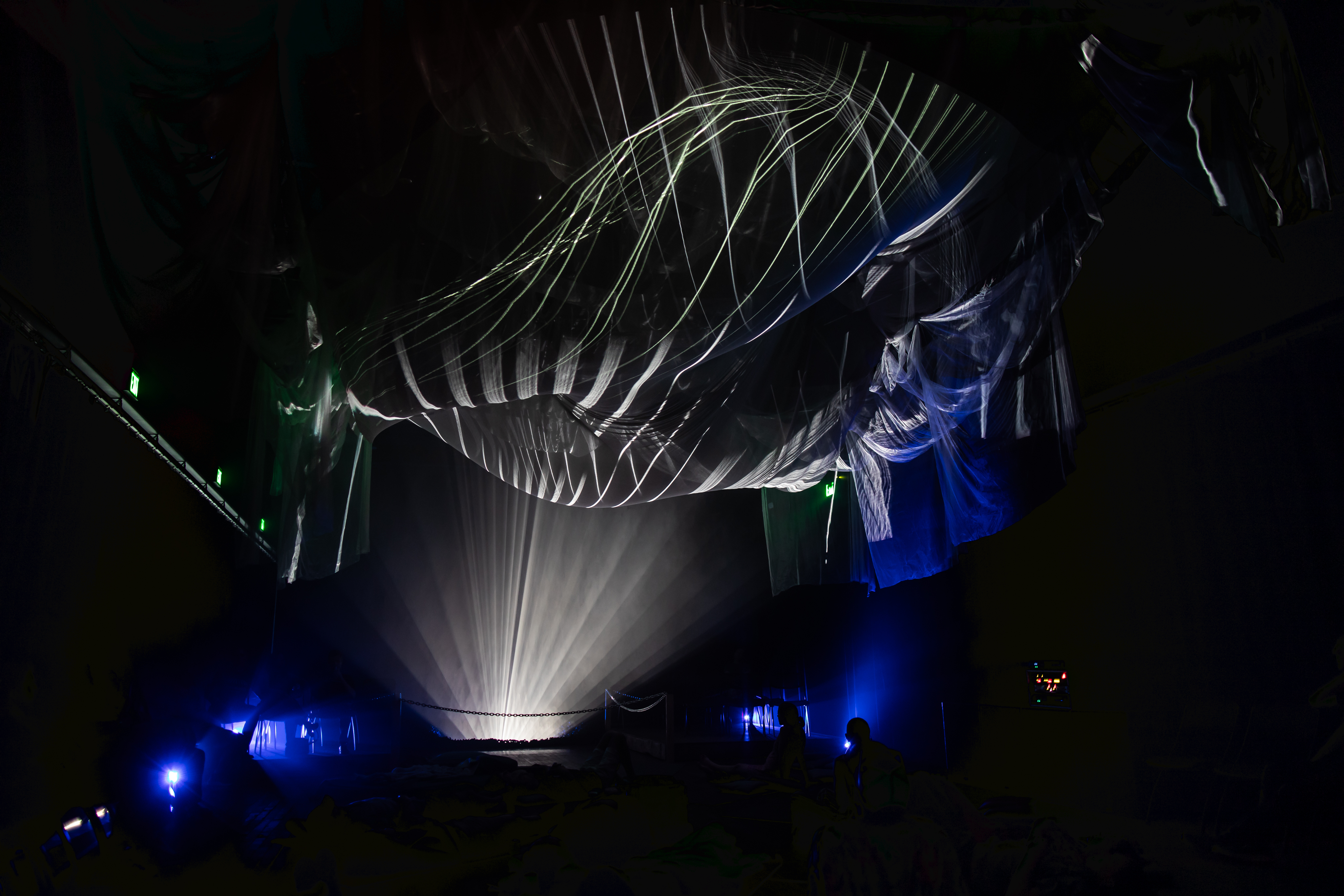
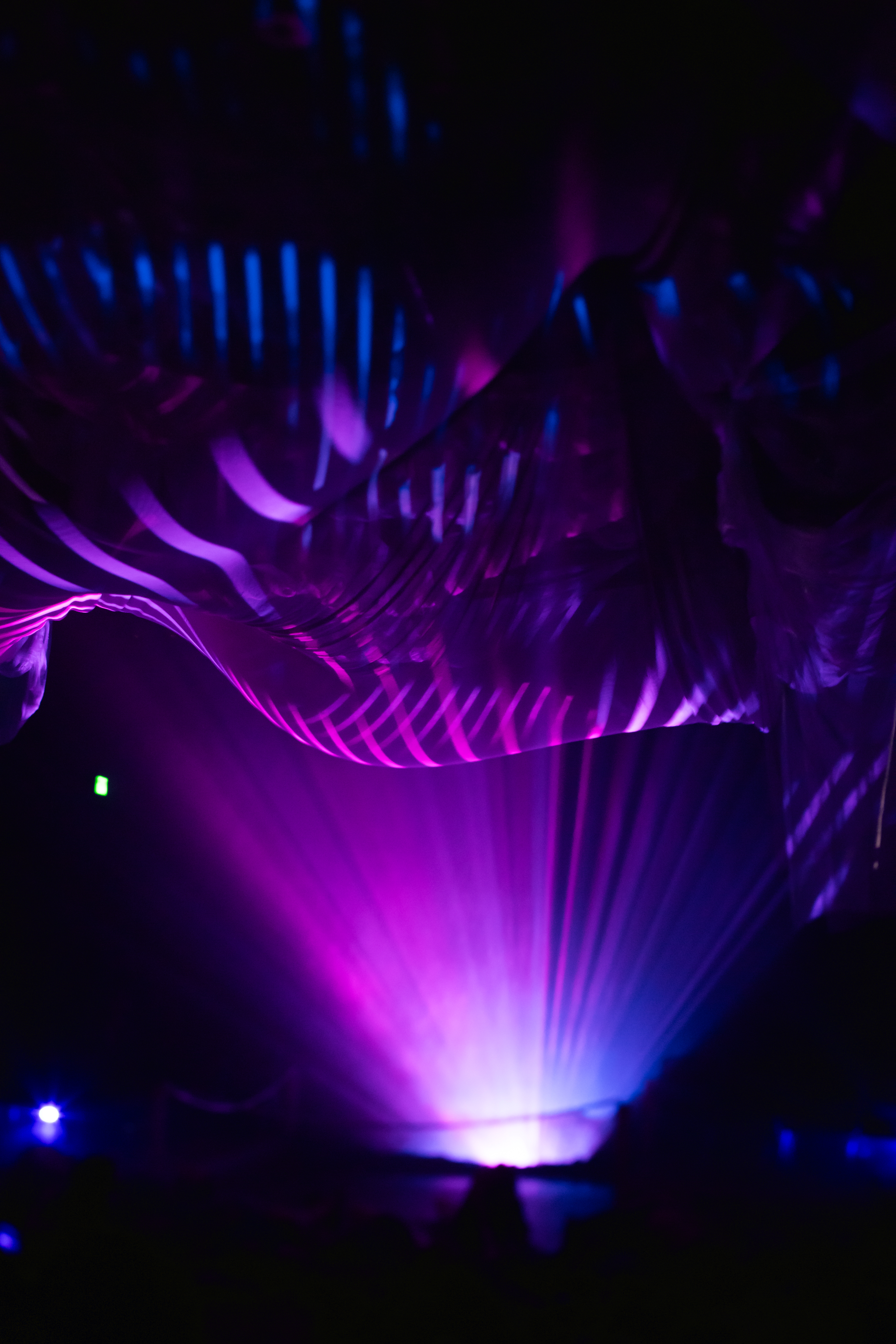
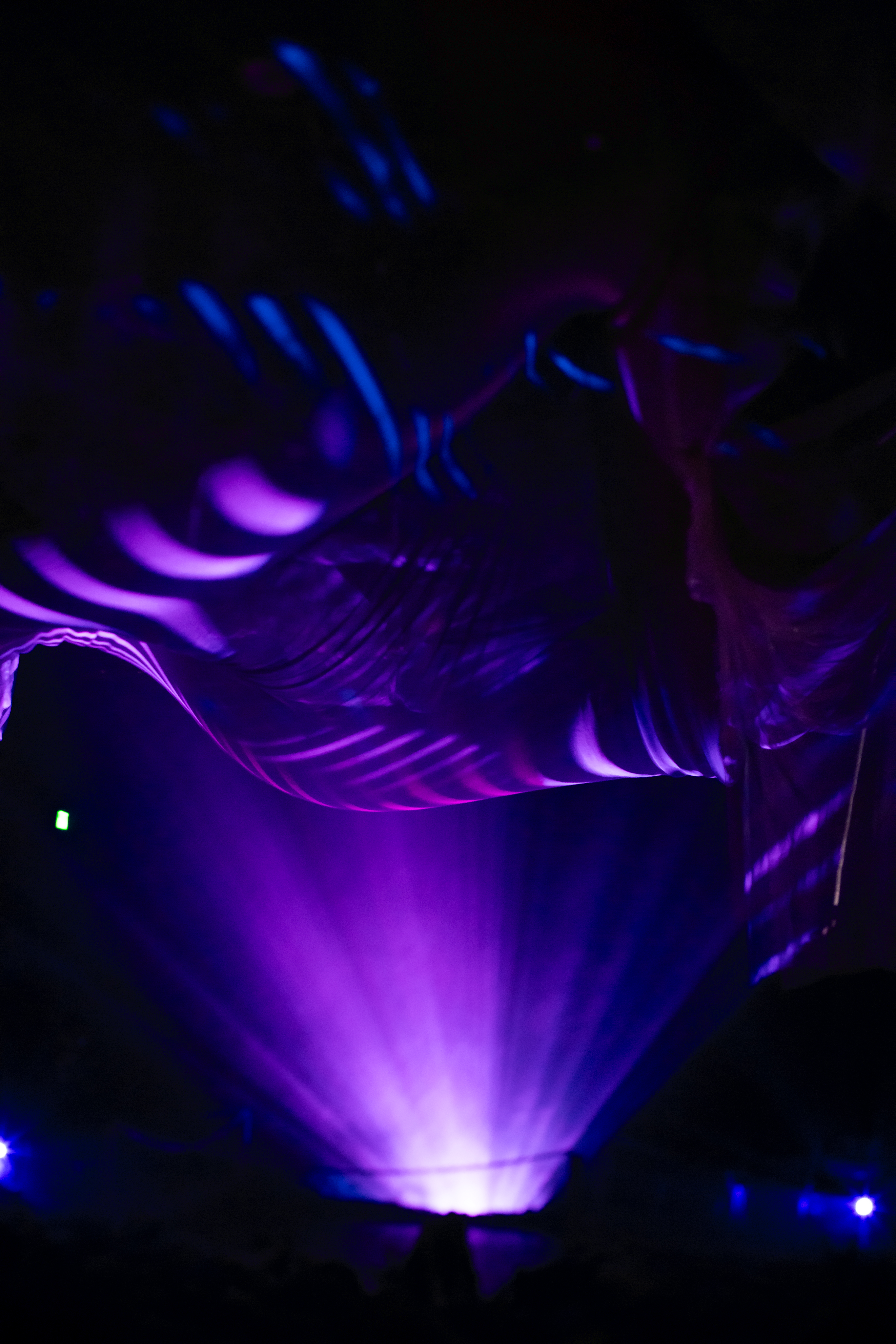
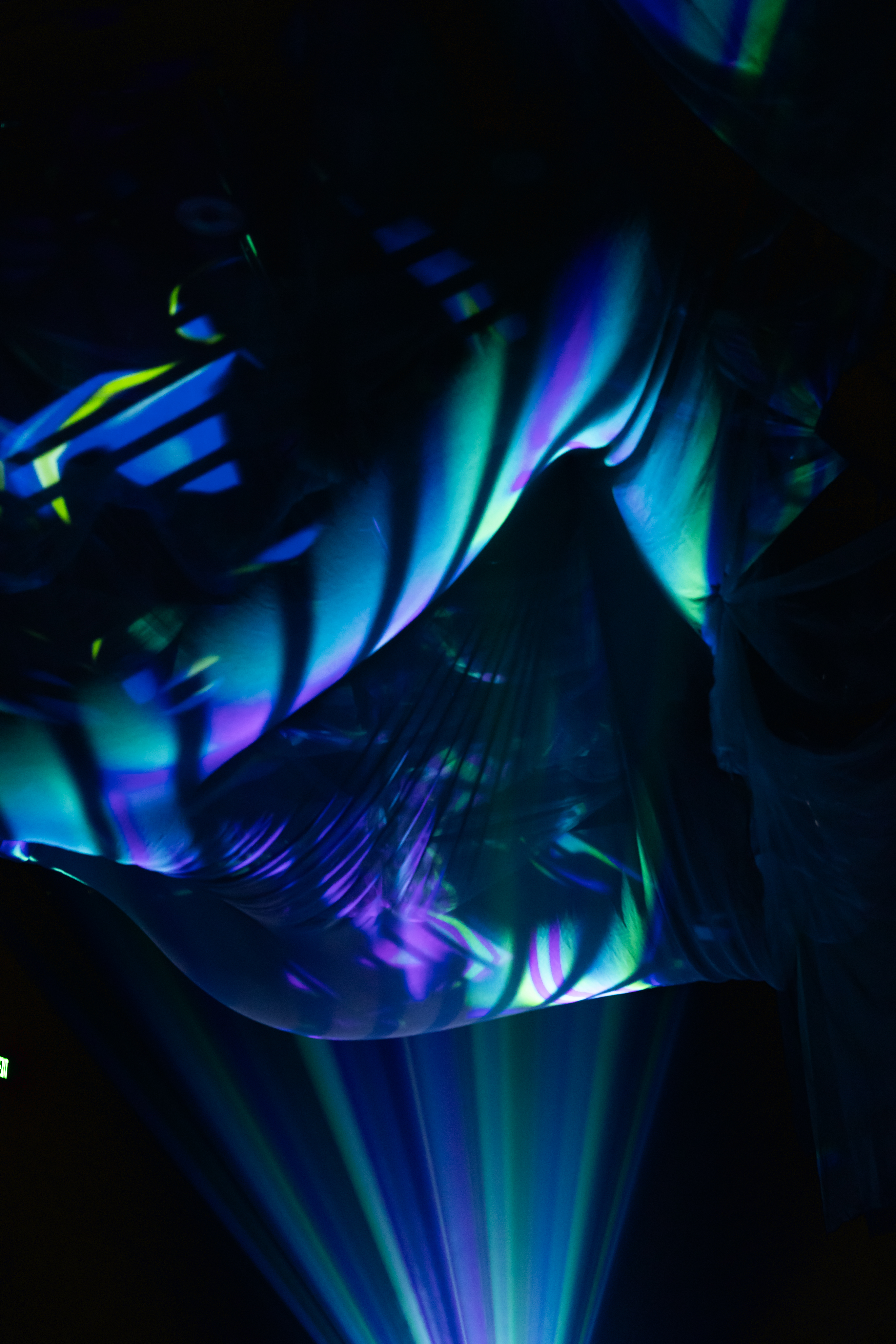
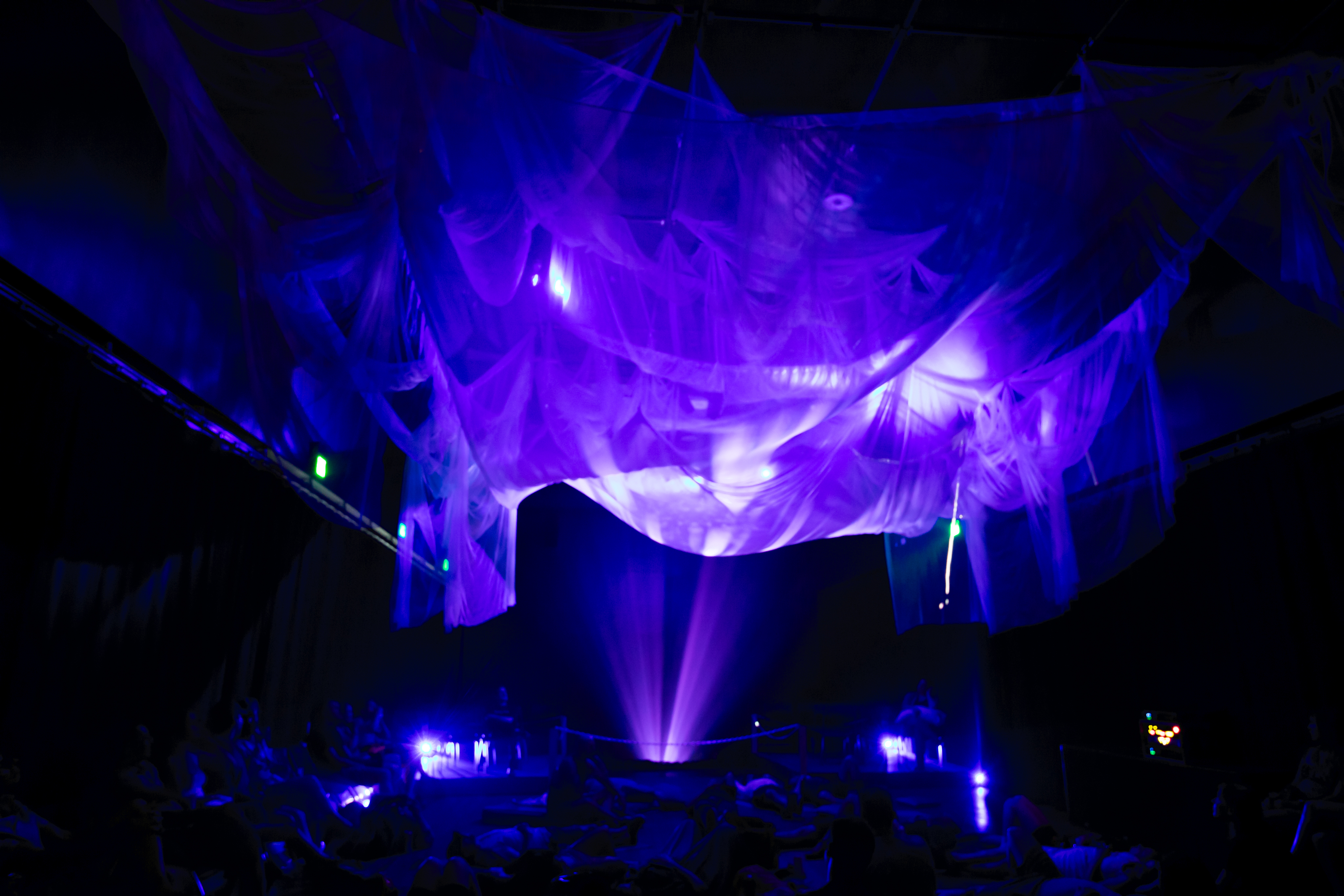
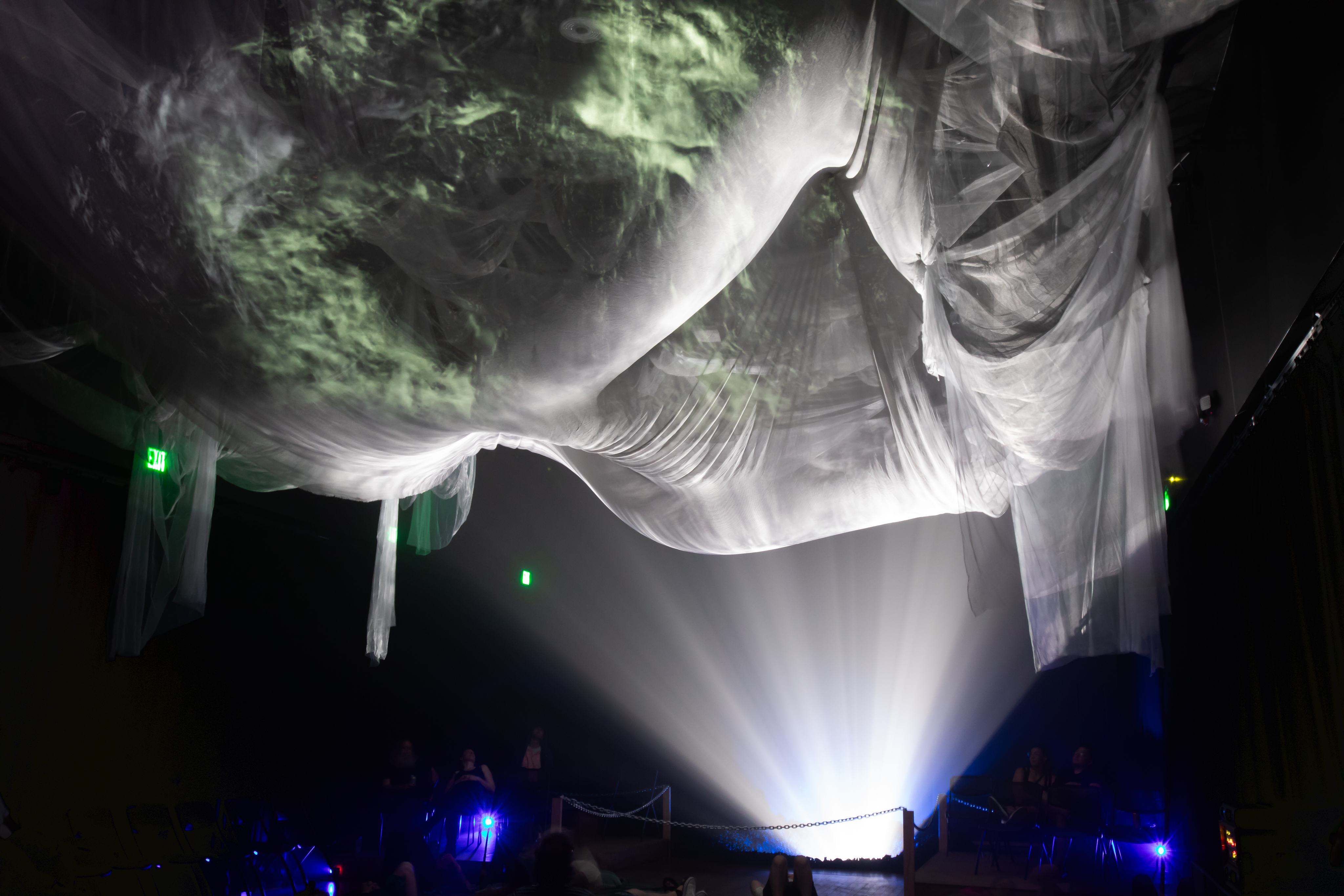
- Projector embedded within a recessed cavity in the floor; beam traveled upward, visible in the air as a fluctuating prism of color
- Suspended projection surface hovered overhead; audience invited to lie beneath it or sit along multi-level platforms
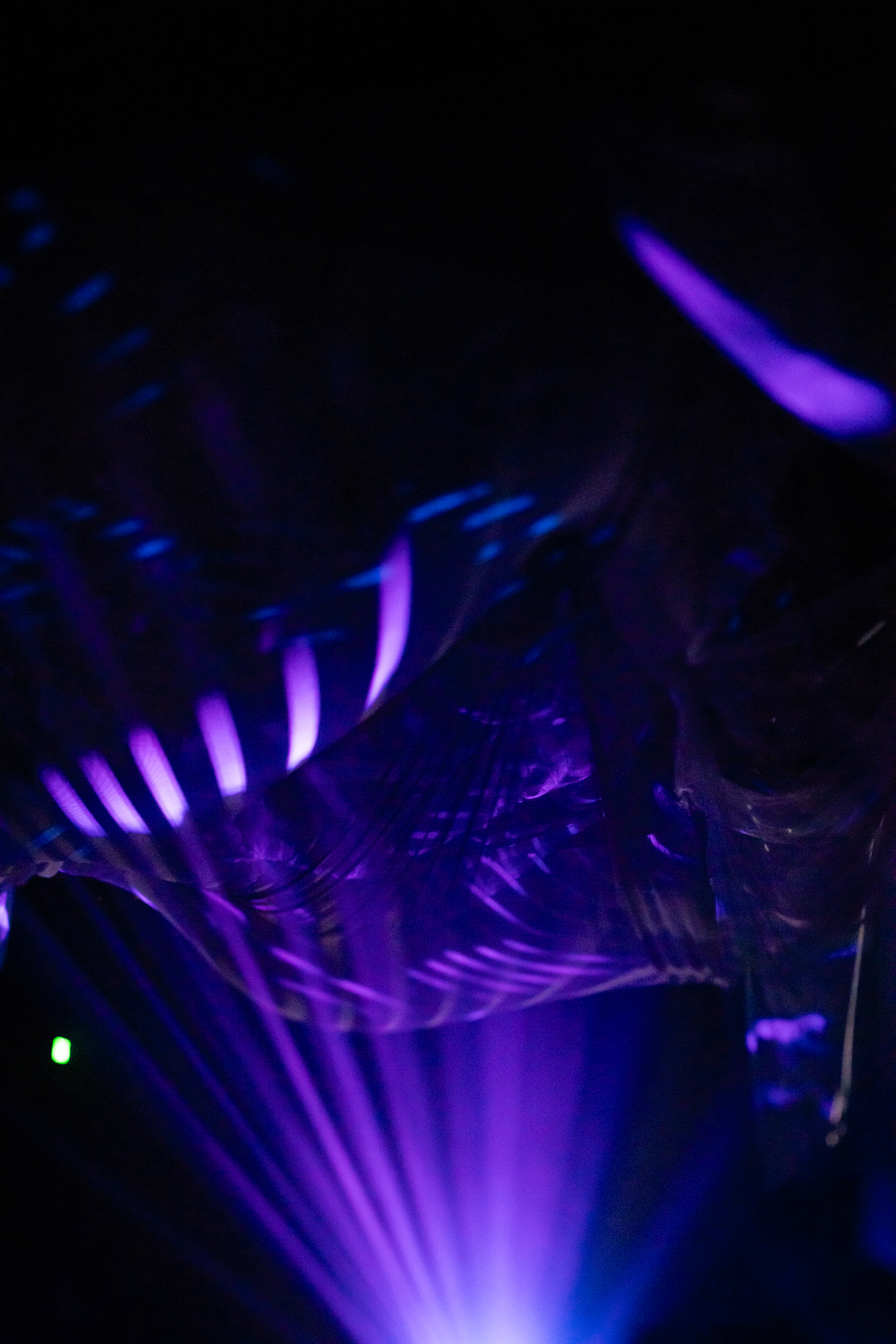
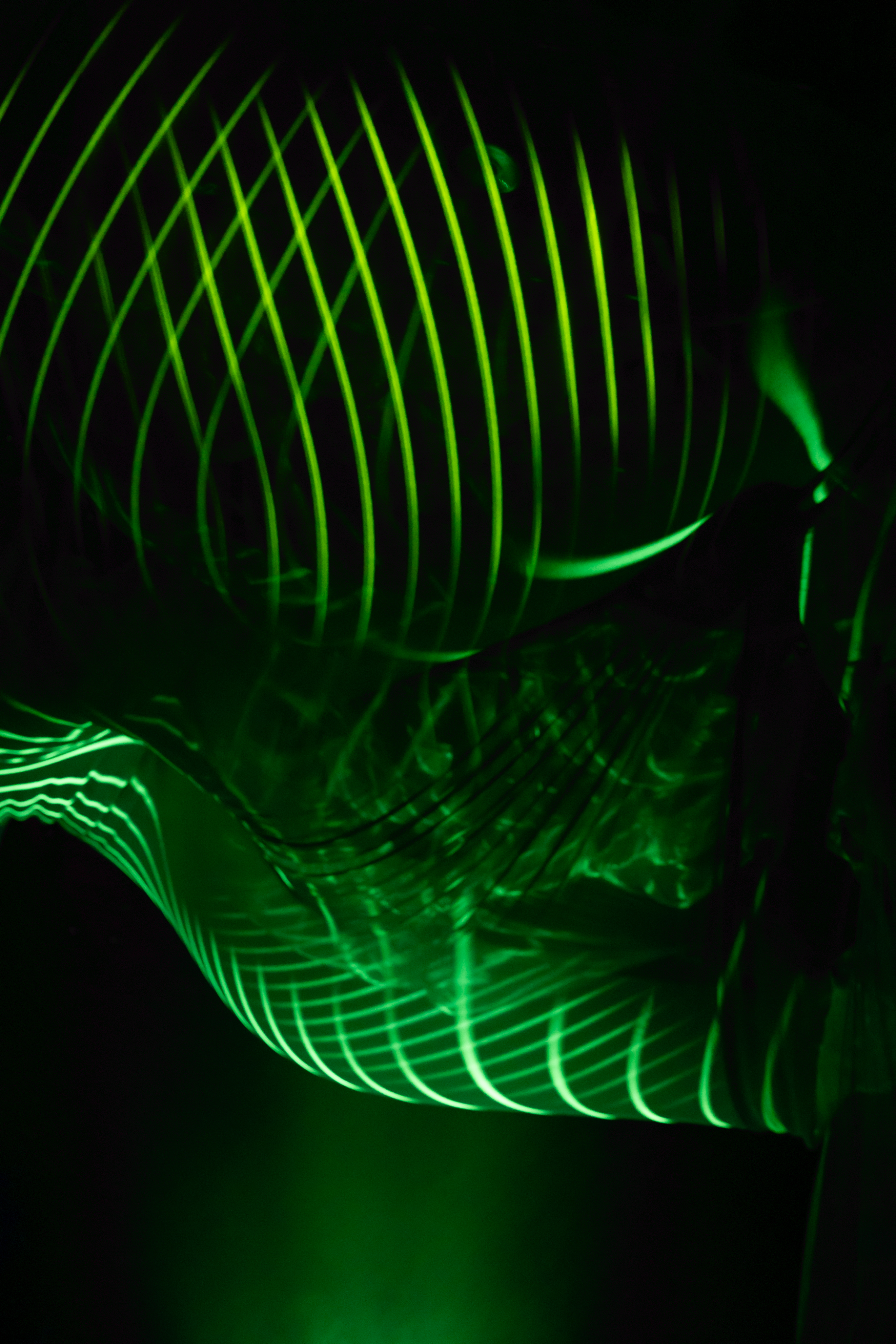
- Fabric surfaces billowed unpredictably, bending and distorting projected imagery
- Multiple projectors overlapped imagery across shared zones, creating interference patterns and soft visual seams
- Light originated from below, images moved above; gravity became ambiguous
Spatial Experience
There was no prescribed orientation. Guests could lie down, sit, stand, wander, leave, return. The installation rewarded stillness but did not demand it. Sound traveled across bodies before resolving into architecture. The environment oscillated between interior and exterior sensation. A ceiling became a horizon. A floor became a source. Presence was not passive. It was negotiated.
Documentation Notes
Inversion / Presence advanced the series' investigation into spatial authority, collapsing performer and environment into a shared perceptual system.