Security
A performance of labor and data.
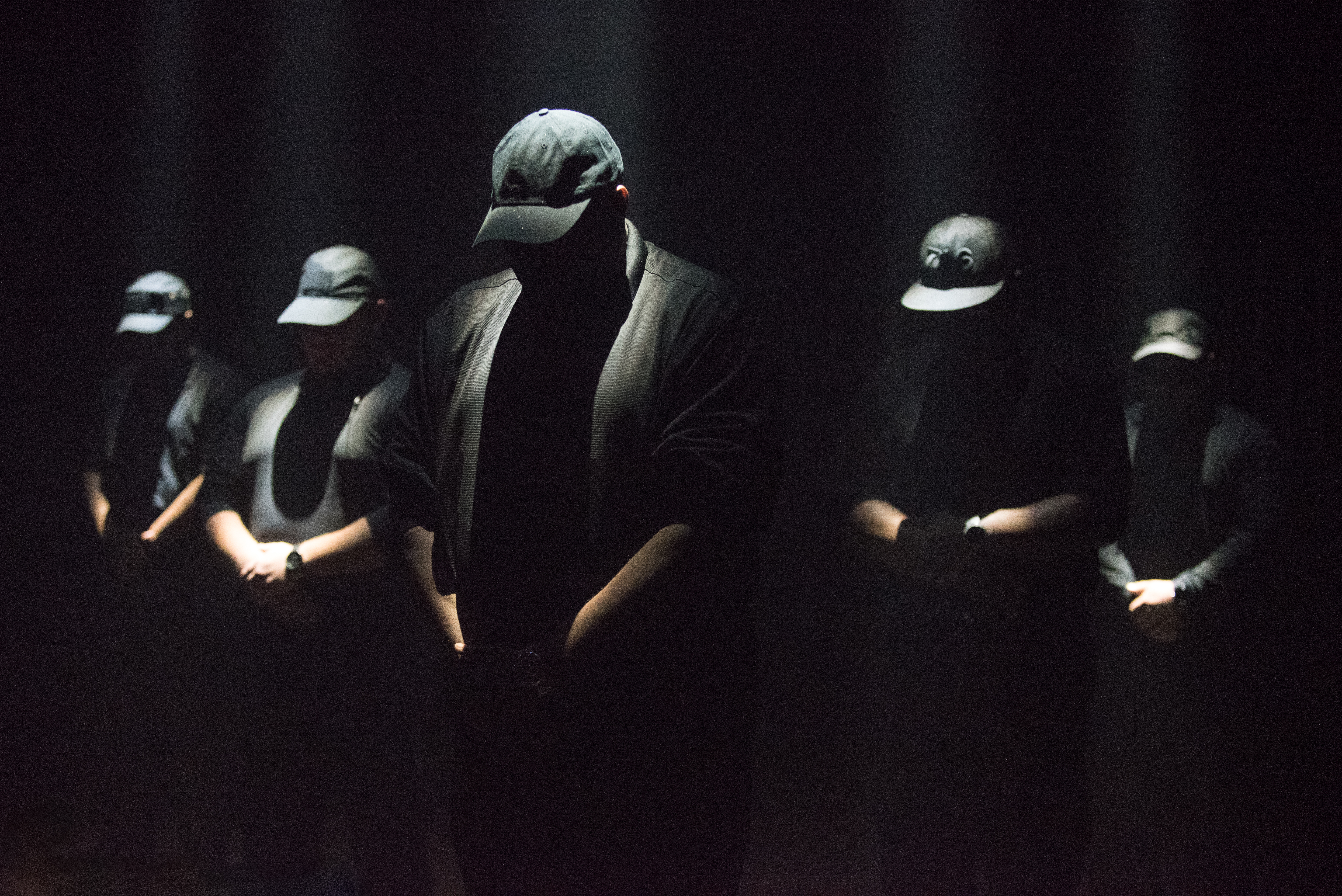
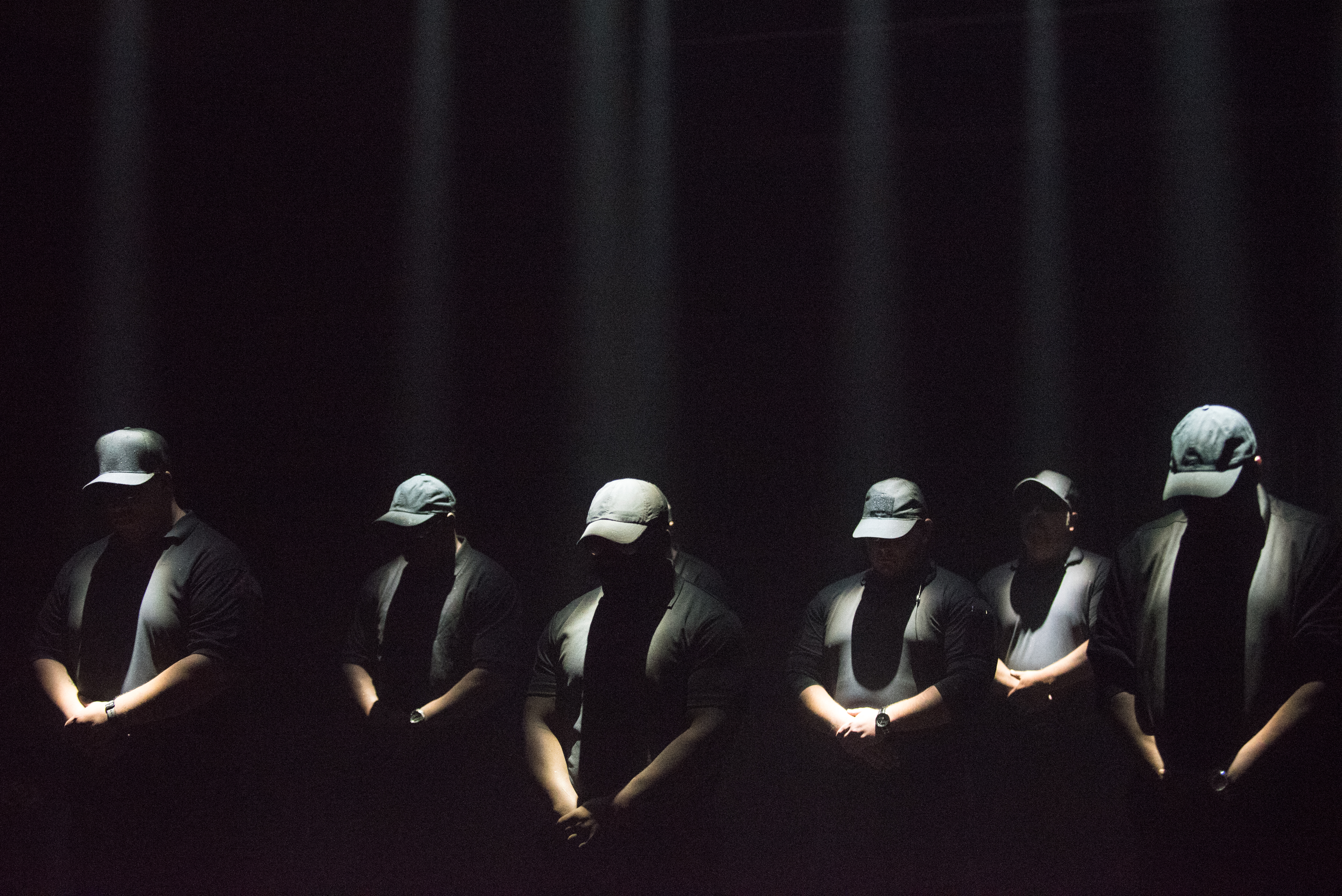
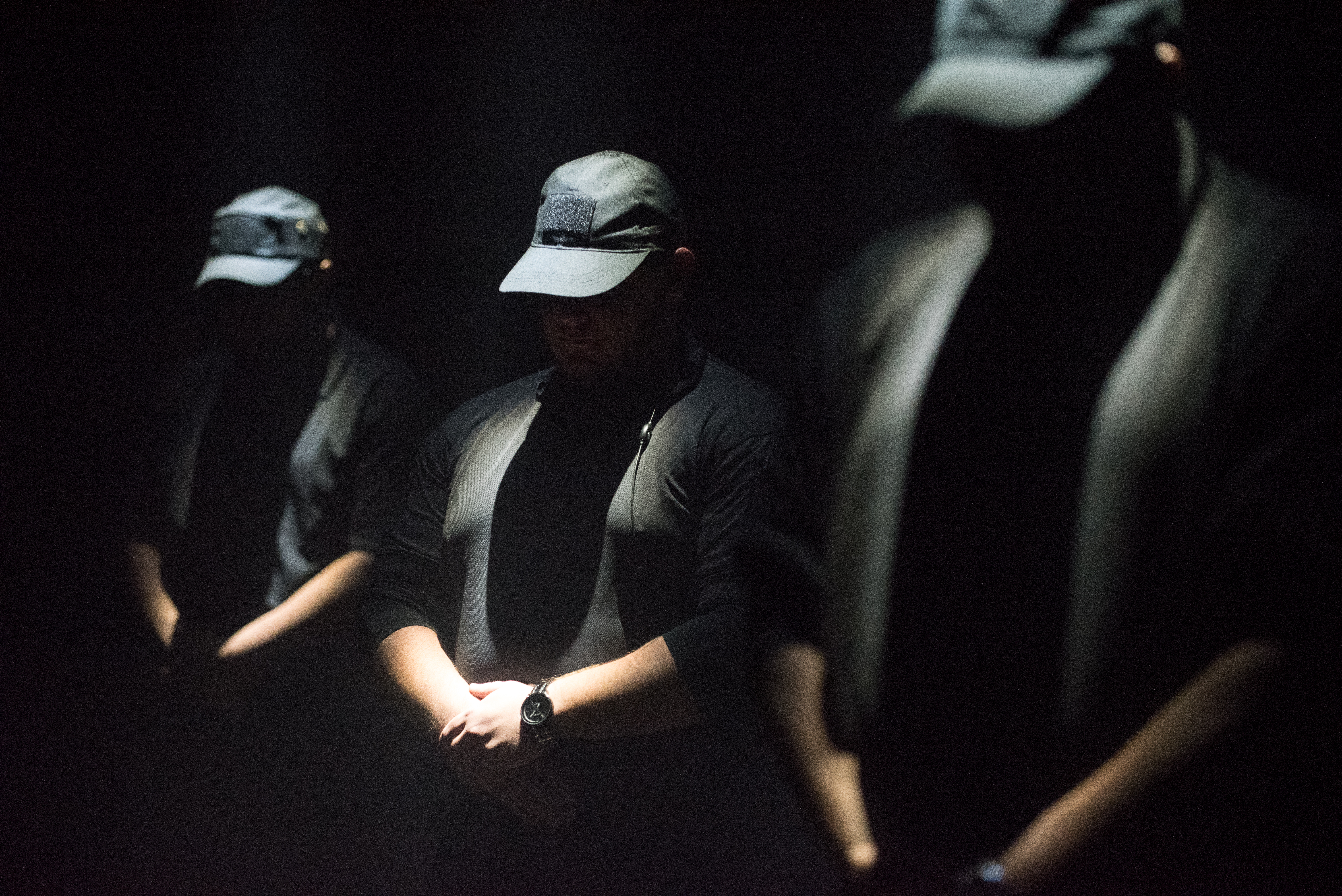
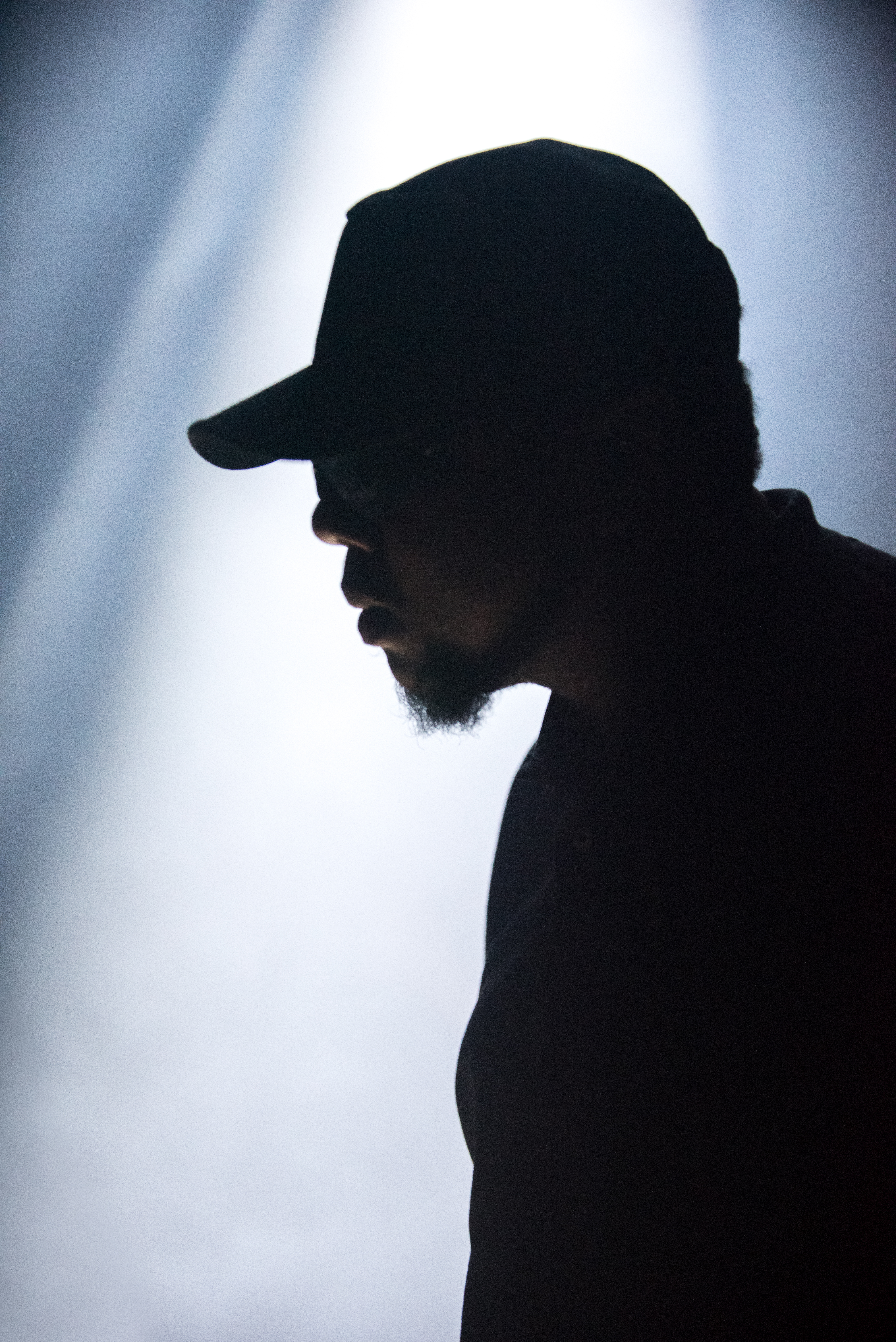
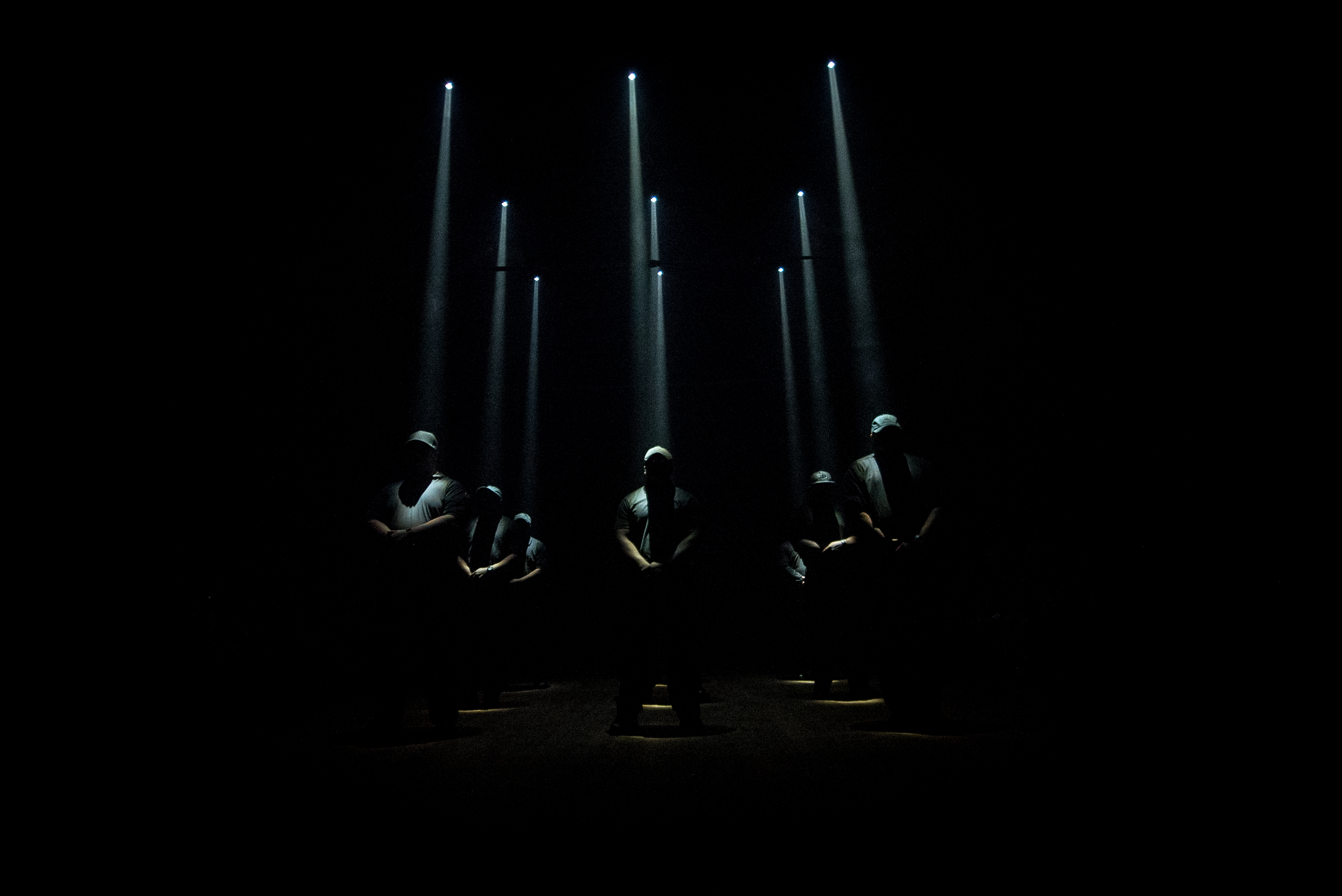
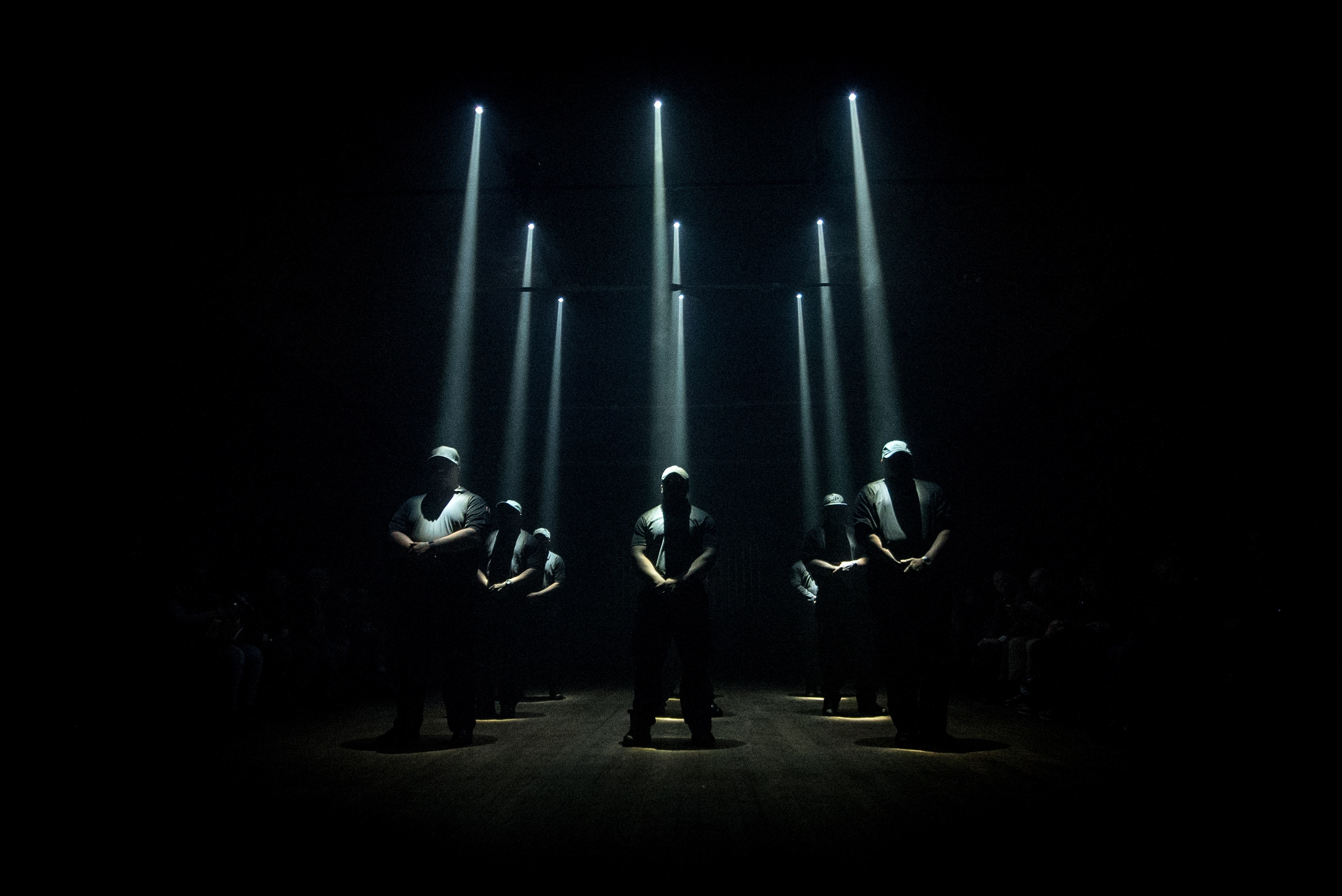
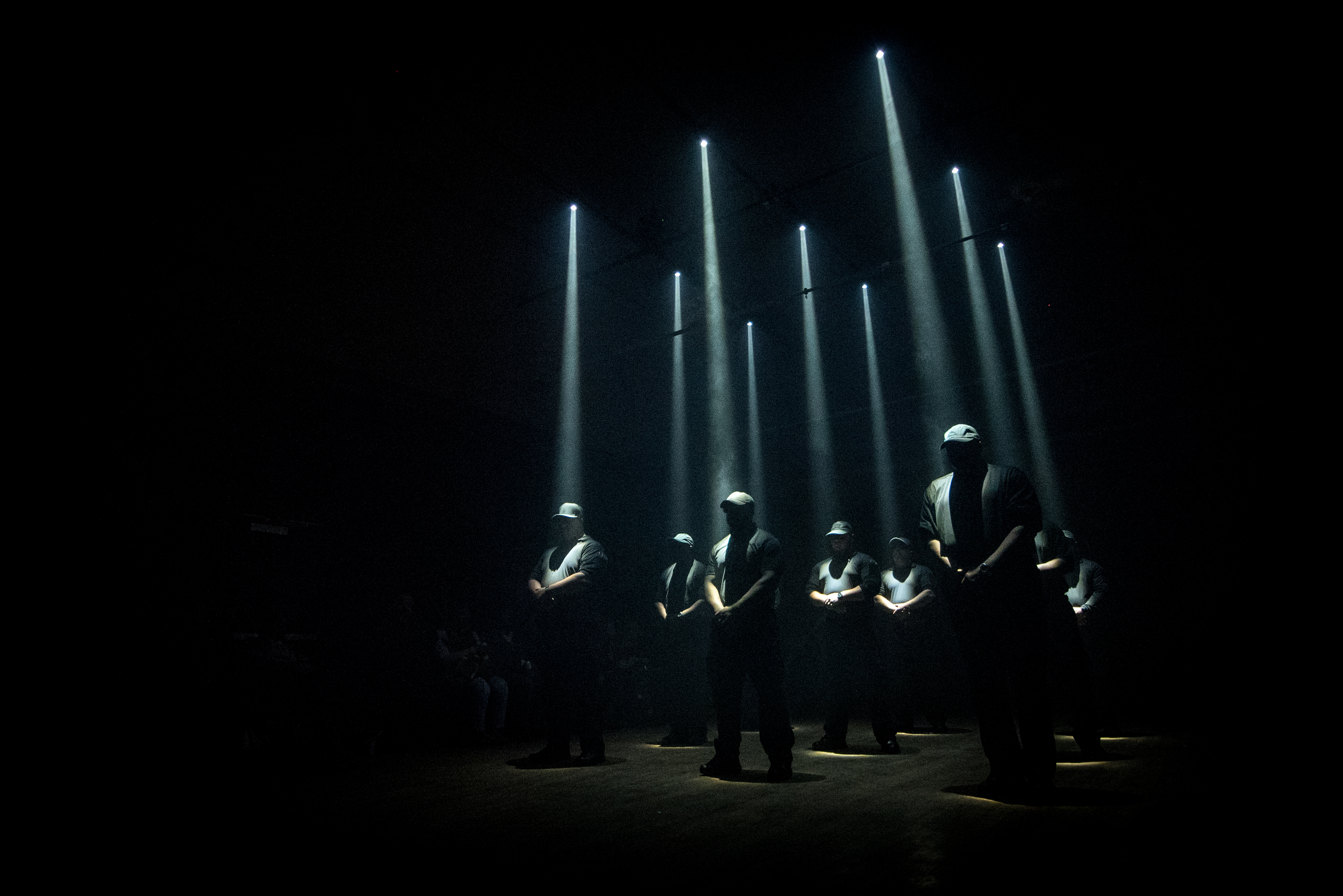
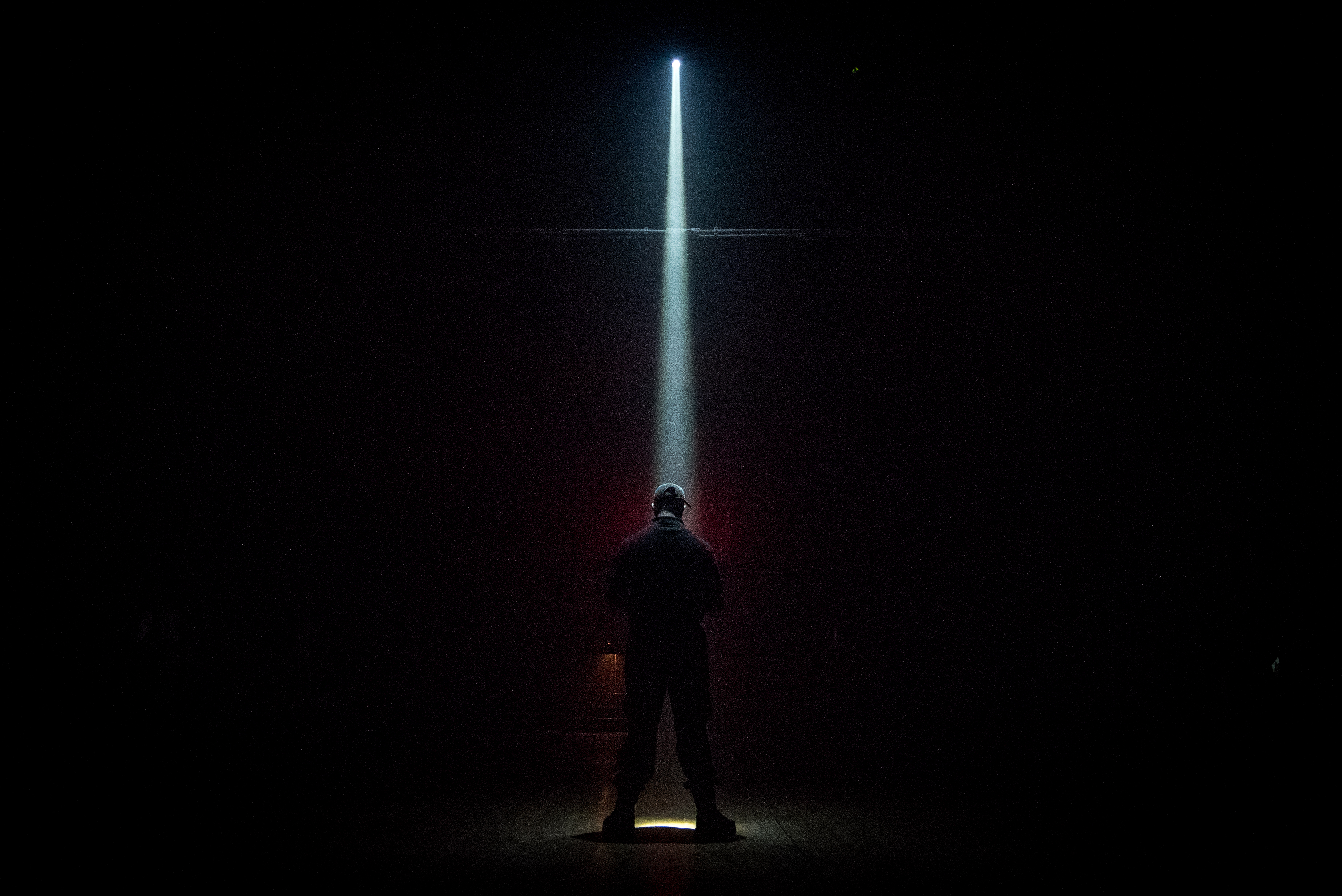
Security extends Marcel Duchamp's concept of the readymade to performance: paid security guards replace actors. Form, sound, and light are derived from the security sector. Traditional theatrical narrative bends as audience and players intersect in their normative roles of watcher and watched.
Video
Documentation

Concept
What happens when one element of theater is replaced for another? How does it affect adjacent elements? How does it change the viewer?
Four themes emerged: Substitution — using security officers in place of actors. Surveillance — the dichotomy of watcher and watched; perceptions of safety. Risk — officers patrolling and protecting property on behalf of private industry. Privatization — the growing trend of private companies replacing public services (natural resources, contractors, firefighters, healthcare, charter schools, police) around the globe.
System / Method
- Statistics, imagery, and text from scholarly articles and government databases as source material
- Algorithmic tools to analyze, translate, and create machine-readable files
- Data abstracted via digital communication protocols into light and sound patterns
- Output projected onto a grid of 12 paid security guards
- CAD modeling and choreography developed on laptop without actors present (guards unavailable for rehearsal)
- Hard-edged light fields, sparse audio textures, spatial segmentation
Spatial Experience
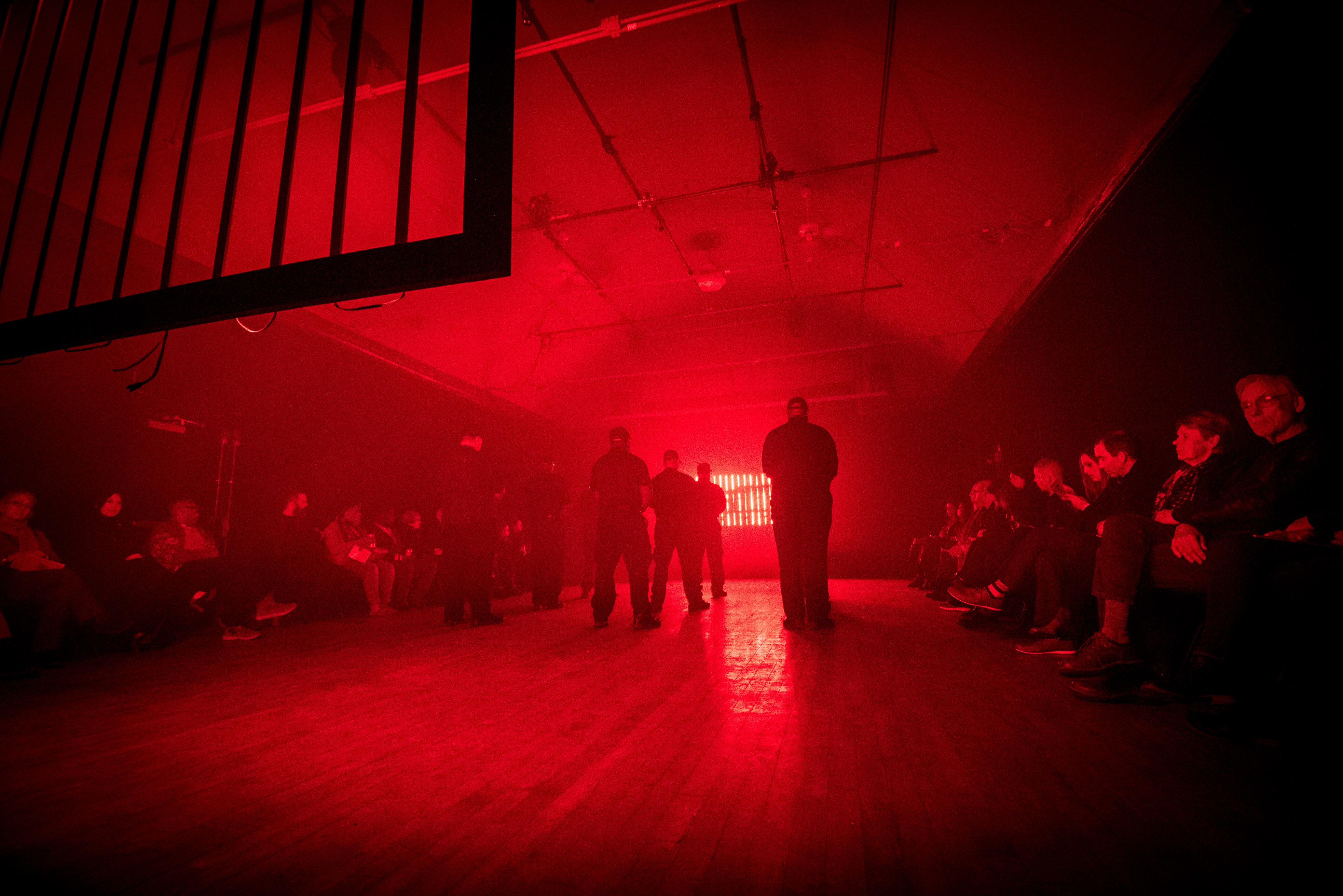
Both audience and players occupy their normative roles. The watcher and the watched intersect. The room feels monitored rather than enveloped.
Documentation Notes
Conceived and directed by Tim Stegner. System programming, sound and lighting design by Frank Napolski.
In preparation, Stegner completed the first course in New York State security guard training — the 'Eight Hour Pre-Assignment,' an introduction to private security services and the first step to receiving an official security license.